
DeFi Is Entering a New Era
The first generation of decentralized finance proved that blockchain networks could replicate many of the core functions traditionally performed by banks, brokers, and financial intermediaries. Lending, borrowing, trading, yield generation, and liquidity provisioning all became possible through smart contracts operating without centralized oversight. While this innovation attracted millions of retail users and billions of dollars in digital assets, institutional investors largely remained on the sidelines, constrained by regulatory uncertainty, fragmented infrastructure, limited liquidity, and the absence of familiar financial instruments.
That landscape is changing rapidly. The evolution of blockchain technology, the emergence of tokenized real-world assets (RWAs), improvements in cross-chain interoperability, and the maturation of decentralized liquidity infrastructure are creating an environment that increasingly satisfies institutional requirements without compromising the core principles of decentralization. Rather than viewing DeFi as an experimental alternative to traditional finance, many institutions now recognize it as a complementary financial layer capable of increasing efficiency, reducing operational costs, expanding market access, and unlocking entirely new investment opportunities.
The current phase of DeFi is therefore not defined by speculative enthusiasm but by infrastructure. Liquidity is becoming more intelligent, more interconnected, and more capital-efficient than ever before. As traditional capital begins flowing into decentralized ecosystems, the financial industry is witnessing one of the most significant structural transformations since the emergence of electronic trading.
Why Liquidity Has Become the Foundation of Modern Finance
Every financial market depends on liquidity. Whether investors are purchasing government bonds, equities, commodities, or digital assets, liquidity determines how efficiently capital can move between participants without creating excessive price volatility.
Traditional financial markets rely on centralized exchanges, clearing houses, custodians, and market makers to provide this liquidity. Although these systems have evolved over decades, they often remain fragmented across jurisdictions, restricted by operating hours, burdened by settlement delays, and dependent on multiple intermediaries.
Decentralized finance approaches liquidity from an entirely different perspective. Smart contracts automate settlement, decentralized exchanges provide continuous market access, and liquidity pools replace many functions historically performed by centralized market makers. Assets can move globally within minutes, and transactions settle directly on blockchain networks without requiring multiple layers of institutional verification.
The significance of this transformation extends beyond cryptocurrency markets. As institutional capital increasingly enters decentralized ecosystems, liquidity itself becomes programmable, composable, and available around the clock.

The Rise of Tokenized Real-World Assets (RWAs)
One of the most important developments within modern DeFi is the rapid expansion of tokenized real-world assets. Rather than limiting blockchain ecosystems to cryptocurrencies alone, financial institutions are increasingly exploring the tokenization of traditional investment products, including government securities, corporate bonds, real estate, private credit, commodities, and investment funds.
Tokenization transforms ownership rights into blockchain-based digital representations while preserving the legal relationship with the underlying asset. This process introduces several advantages that traditional financial infrastructure struggles to deliver.
Fractional ownership enables broader market participation by allowing investors to acquire smaller portions of high-value assets.
Settlement becomes significantly faster because ownership transfers occur directly through blockchain transactions rather than multi-day clearing processes.
Transparency improves through immutable transaction histories that simplify auditing and compliance.
Global accessibility expands as geographically dispersed investors gain access to markets previously restricted by regional financial infrastructure.
For institutional investors managing diversified portfolios, tokenized assets offer a bridge between conventional capital markets and decentralized financial protocols. Rather than replacing traditional investments, blockchain extends their accessibility and operational efficiency.
Cross-Chain Liquidity Is Eliminating Fragmentation
The early stages of decentralized finance were characterized by isolated blockchain ecosystems. Ethereum, Solana, Avalanche, BNB Chain, Polygon, and numerous Layer-2 networks each developed vibrant financial ecosystems, yet liquidity remained fragmented across separate chains.
This fragmentation reduced capital efficiency by forcing investors to choose where their assets would remain locked, often requiring expensive bridging mechanisms whenever market conditions changed.
The emergence of next-generation interoperability protocols is fundamentally changing this dynamic.
Cross-chain messaging standards, decentralized bridges, modular execution layers, and unified liquidity networks increasingly allow capital to move seamlessly across blockchain ecosystems while maintaining security and minimizing operational complexity.
For institutional investors, this development carries enormous strategic significance. Instead of allocating liquidity to isolated blockchain environments, capital can increasingly flow toward whichever protocols offer the most attractive opportunities at any given moment.
The future of DeFi is unlikely to belong to a single blockchain. It will belong to interconnected ecosystems where liquidity behaves as a unified global resource rather than isolated pools competing for attention.
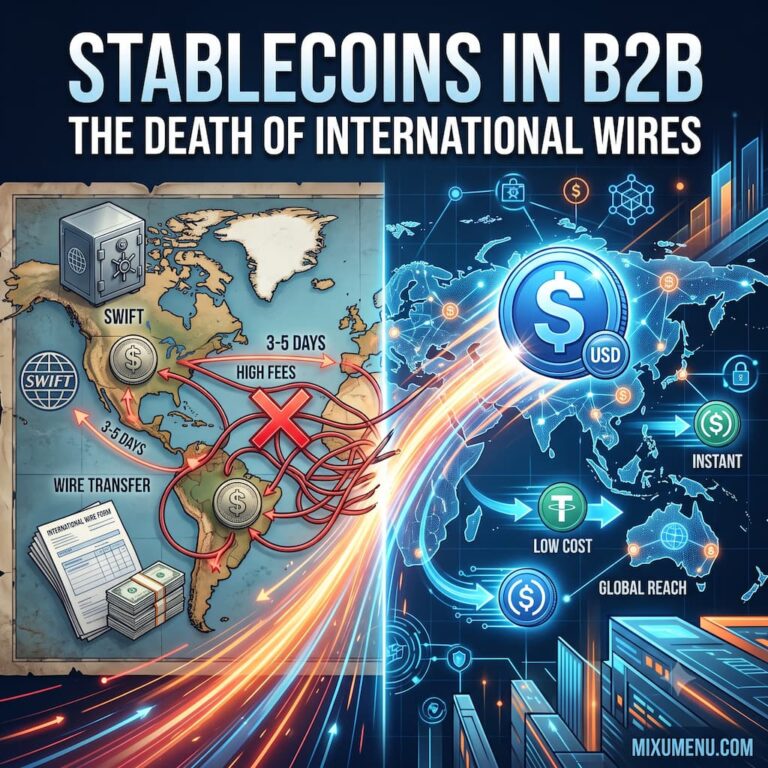
Capital Efficiency Is Becoming the New Competitive Advantage
Institutional investors rarely evaluate opportunities solely according to headline returns. Capital efficiency—the ability to maximize productive utilization while minimizing idle assets—has become an equally important consideration.
Traditional financial systems often require substantial collateral, lengthy settlement periods, and operational buffers that reduce overall portfolio efficiency.
Modern DeFi protocols increasingly address these challenges through innovations such as:
Dynamic Liquidity Allocation
Advanced liquidity management systems automatically redistribute capital toward pools generating stronger risk-adjusted returns while preserving sufficient reserves for withdrawals and changing market conditions.
Modular Yield Strategies
Instead of locking assets within a single protocol, sophisticated vault architectures dynamically allocate liquidity across multiple opportunities based on predefined investment parameters.
Automated Risk Management
Smart contracts increasingly incorporate mechanisms capable of adjusting collateral requirements, monitoring protocol health, and responding to changing market conditions without constant manual intervention.
Collectively, these innovations enable institutional capital to remain productive while maintaining significantly greater operational flexibility.
Institutional Adoption Requires Institutional Infrastructure
Although blockchain technology offers unprecedented efficiency, institutional investors continue to require governance frameworks consistent with regulatory expectations and fiduciary responsibilities.
This demand has accelerated the development of infrastructure specifically designed for professional capital management.
Modern institutional DeFi increasingly incorporates:
- permissioned liquidity pools;
- regulatory compliance frameworks;
- advanced custody solutions;
- identity verification where required;
- transparent reporting systems;
- institutional-grade security architecture;
- comprehensive audit trails.
Rather than contradicting decentralization, these components enable traditional financial organizations to participate responsibly within blockchain ecosystems while satisfying internal governance requirements.
The convergence of decentralized infrastructure and institutional compliance represents one of the defining characteristics of the current phase of Web3 finance.
Risk Management Is Driving the Next Stage of Growth
Institutional participation depends not only on opportunity but also on confidence.
As decentralized finance matures, risk management has become increasingly sophisticated.
Professional investors evaluate multiple dimensions before allocating capital, including:
Smart Contract Security
Independent code audits, formal verification, continuous monitoring, and bug bounty programs significantly reduce technical vulnerabilities.
Liquidity Depth
Deep and diversified liquidity pools reduce execution costs while minimizing slippage during large transactions.
Protocol Governance
Transparent governance mechanisms improve predictability while reducing uncertainty surrounding future protocol development.
Treasury Management
Healthy treasury reserves provide additional resilience during periods of elevated market volatility.
Rather than pursuing maximum returns regardless of risk, institutional investors increasingly prioritize sustainable infrastructure capable of supporting long-term capital allocation.
Why Infrastructure Matters More Than Individual Protocols
One of the defining characteristics of mature financial markets is that infrastructure ultimately becomes more valuable than individual products.
Stock exchanges outlast individual companies.
Payment networks endure beyond specific merchants.
Clearing systems remain essential regardless of changing investment trends.
A similar transition is occurring within decentralized finance.
Rather than evaluating isolated yield opportunities, institutions increasingly seek comprehensive infrastructure capable of integrating portfolio management, liquidity optimization, reporting, compliance, custody, and cross-chain connectivity within unified operational environments.
This evolution marks a significant shift from speculative experimentation toward professional capital management.
Building a Reliable Gateway Into Web3 Capital Markets
As decentralized finance becomes increasingly integrated with traditional investment strategies, platforms capable of simplifying this complexity will play a central role in future capital allocation.
Professional investors require far more than access to decentralized protocols. They need infrastructure that enables secure onboarding, diversified exposure, real-time portfolio visibility, automated liquidity management, and seamless interaction across multiple blockchain ecosystems without unnecessary operational friction.
A modern Web3 platform should therefore function as a comprehensive gateway rather than merely another decentralized application. By combining portfolio monitoring, intelligent capital allocation, integrated risk analytics, cross-chain liquidity access, and institutional-grade security standards within a unified environment, such platforms help bridge the operational gap between conventional finance and decentralized markets.
For investors navigating an increasingly interconnected blockchain economy, infrastructure becomes the foundation upon which successful long-term strategies are built.
The Future of Liquidity Is Borderless
Financial markets have historically been constrained by geography, banking hours, jurisdictional barriers, and fragmented settlement infrastructure. Blockchain gradually removes many of these limitations by enabling capital to circulate continuously across global networks operating twenty-four hours a day.
The next generation of liquidity will likely be characterized by interoperability rather than competition. Tokenized securities, decentralized lending markets, programmable collateral, artificial intelligence, automated portfolio optimization, and real-time settlement will increasingly operate together within unified financial ecosystems.
Institutions will not abandon traditional finance overnight. Instead, they will progressively integrate decentralized infrastructure wherever it improves efficiency, transparency, and capital productivity.
This hybrid financial architecture represents the most realistic vision of the coming decade.
Conclusion
The evolution of decentralized finance has entered a fundamentally different stage. Early innovation demonstrated what blockchain could achieve, while the current generation focuses on making those capabilities practical for institutional capital. Tokenized real-world assets, intelligent liquidity infrastructure, cross-chain interoperability, and increasingly sophisticated risk management frameworks are transforming DeFi from an experimental sector into a mature financial ecosystem capable of supporting global investment activity.
Liquidity is no longer confined to individual exchanges, isolated blockchain networks, or regional financial centers. It is becoming programmable, borderless, and continuously accessible through decentralized infrastructure designed for an increasingly interconnected world.
For institutions seeking to diversify portfolios, improve operational efficiency, and participate in the future of digital capital markets, the question is no longer whether decentralized finance will become relevant. The question is how quickly they can integrate reliable Web3 infrastructure into their long-term investment strategy.