
High Yields Often Come With Hidden Trade-Offs
Providing liquidity has become one of the defining features of decentralized finance. Instead of leaving digital assets idle in a wallet, investors can deposit them into liquidity pools that power decentralized exchanges, lending protocols, and automated market makers (AMMs). In return, liquidity providers earn a share of trading fees and, in many cases, additional token rewards through liquidity mining or incentive programs.
At first glance, the concept appears remarkably simple. Deposit two assets into a pool, allow traders to use that liquidity, and collect passive income over time. Many newcomers are drawn to the attractive Annual Percentage Yields (APYs) displayed on DeFi platforms without fully understanding how those returns are generated—or the risks involved.
One of the most misunderstood risks is Impermanent Loss (IL).
Despite its somewhat intimidating name, Impermanent Loss is neither mysterious nor impossible to manage. It is a predictable mathematical consequence of how Automated Market Makers rebalance assets inside liquidity pools. Every liquidity provider, whether managing a few hundred dollars or a multimillion-dollar portfolio, should understand how IL works before committing capital.
The good news is that Impermanent Loss is not always permanent, nor does it automatically erase all profits. With proper pool selection, risk management, and portfolio diversification, investors can significantly reduce its impact while continuing to benefit from the opportunities offered by decentralized finance.
What Is Impermanent Loss?
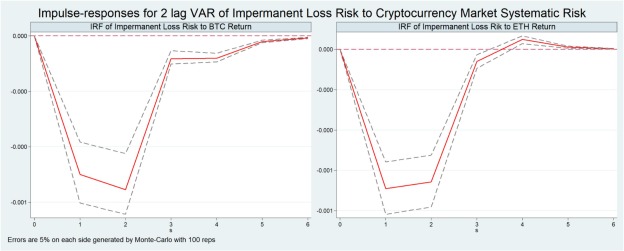
Impermanent Loss is the difference between the value of assets held inside a liquidity pool and the value those same assets would have had if they had simply remained in your wallet.
In other words, by providing liquidity, you allow the pool to continuously rebalance your assets according to market demand.
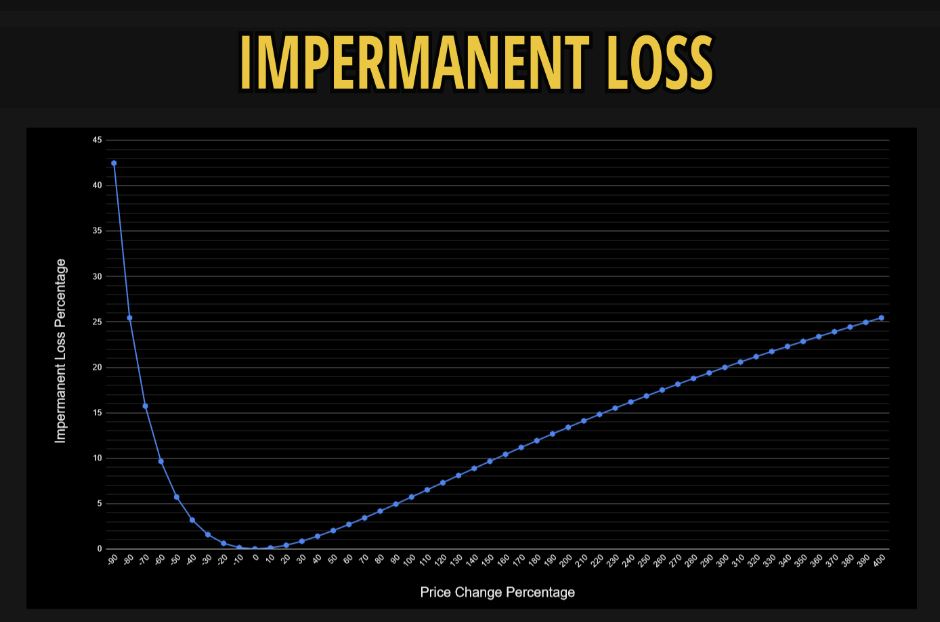
When the price of one asset changes significantly relative to the other, the pool automatically adjusts its composition.
As a result:
- you end up holding less of the appreciating asset;
- you hold more of the depreciating asset;
- your total portfolio value may become lower than if you had simply held both assets outside the pool.
This difference is known as Impermanent Loss.
It is called “impermanent” because the loss only becomes realized if you withdraw your liquidity while the price difference still exists.
Why Does Impermanent Loss Happen?
To understand Impermanent Loss, it is important to understand how Automated Market Makers work.
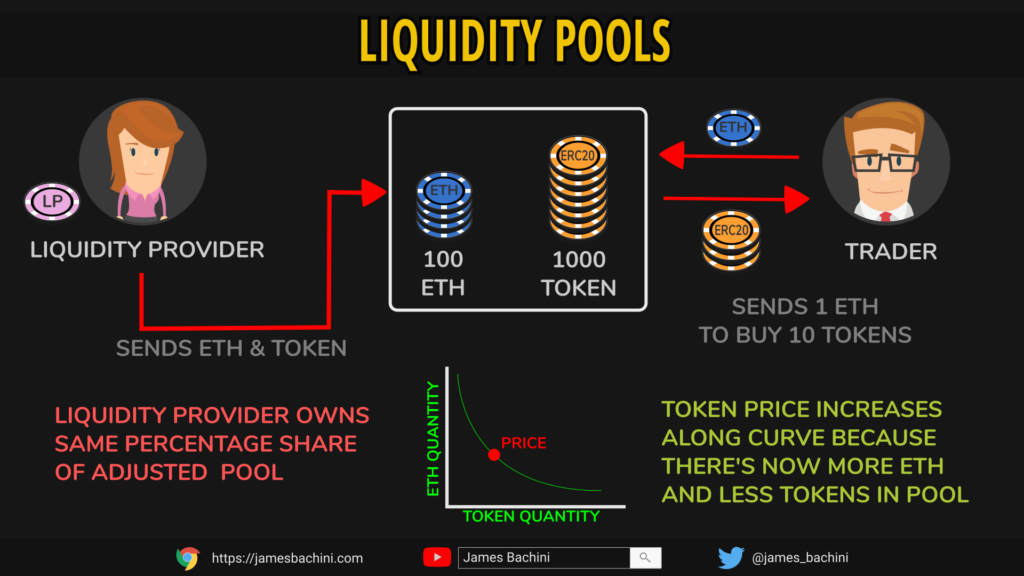
Unlike centralized exchanges, where buyers and sellers trade directly through an order book, AMMs rely on liquidity pools.
A typical liquidity pool contains two assets.
For example:
- ETH / USDC
- BTC / ETH
- SOL / USDC
- LINK / ETH
The protocol constantly maintains a mathematical balance between both assets.
Whenever traders buy one asset, the pool automatically sells part of its reserves while purchasing more of the opposite asset.
This continuous rebalancing ensures liquidity remains available without requiring traditional market makers.
However, it also means that liquidity providers indirectly sell appreciating assets during strong price rallies and accumulate more of the weaker-performing asset.
A Simple Example of Impermanent Loss
Imagine you provide liquidity using:
- 1 ETH
- 2,000 USDC
At the time of deposit:
- ETH = $2,000
- Total investment = $4,000
Several weeks later, ETH doubles in price.
Now:
- ETH = $4,000
If you had simply held your assets:
- 1 ETH = $4,000
- 2,000 USDC = $2,000
Total value:
$6,000
However, because your liquidity pool continuously rebalanced assets as traders bought ETH, you now own:
- less ETH;
- more USDC.
Your liquidity position may now be worth:
$5,700
The difference:
$300
This is Impermanent Loss.
You still made money because your portfolio increased from $4,000 to $5,700.
You simply earned less than you would have by holding the original assets.
This distinction is extremely important.
Impermanent Loss does not necessarily mean losing money.
It often means earning a lower return compared to passive holding.
When Does Impermanent Loss Become Permanent?
Impermanent Loss only becomes permanent when liquidity is withdrawn while asset prices remain significantly different from their original ratio.
If prices later return close to the level at which liquidity was initially provided, much or all of the loss may disappear.
This explains why long-term liquidity providers often experience different outcomes than short-term traders.
Market volatility changes continuously.
Price relationships evolve.
Some pools naturally rebalance over time.
Others experience prolonged divergence.
Understanding market conditions is therefore essential before deciding when to enter or exit liquidity positions.
Factors That Increase Impermanent Loss
Not every liquidity pool carries the same level of risk.
Several factors significantly influence the probability and magnitude of IL.
High Price Volatility
The larger the price movement between paired assets, the greater the potential Impermanent Loss.
Pairs involving speculative tokens generally experience much higher IL than more stable markets.
Poorly Correlated Assets
Liquidity pools combining unrelated assets often experience larger price divergence.
Examples include:
- ETH / Meme Coin
- BTC / Gaming Token
- AI Token / Stablecoin
When assets follow completely different market cycles, IL becomes more likely.
Newly Launched Tokens
Early-stage projects frequently experience dramatic price swings.
Although these pools often advertise extremely attractive APYs, higher yields usually compensate for higher risk.
Low Liquidity Pools
Small liquidity pools experience greater price impact during large trades.
Higher volatility inside the pool often increases Impermanent Loss.
How to Reduce Impermanent Loss
Impermanent Loss cannot be eliminated entirely, but several strategies help reduce its impact.
Choose Correlated Asset Pairs
Assets that generally move in the same direction produce lower divergence.
Examples include:
- ETH / stETH
- BTC / Wrapped BTC
- Stablecoin pairs
- Liquid staking derivatives
These pools typically generate significantly lower IL than unrelated assets.
Consider Stablecoin Pools
Pools containing stablecoins generally experience minimal price fluctuation.
Examples:
- USDC / USDT
- DAI / USDC
- USDT / USDC
Although yields may be lower, risk is often substantially reduced.
Evaluate Fee Generation
Trading fees compensate liquidity providers for accepting risk.
Highly active pools may generate sufficient fees to offset Impermanent Loss over time.
Before investing, evaluate:
- trading volume;
- liquidity depth;
- historical fee generation;
- user activity.
High trading activity often improves long-term profitability.
Diversify Across Multiple Pools
Avoid concentrating your entire portfolio in a single liquidity pool.
Diversification spreads exposure across different:
- blockchain ecosystems;
- trading pairs;
- protocols;
- yield strategies.
Balanced portfolios generally demonstrate greater resilience during volatile market conditions.
APY Alone Should Never Drive Investment Decisions
One of the biggest mistakes beginners make is comparing liquidity pools solely by advertised yield.
A pool offering:
250% APY
may ultimately produce lower net returns than one offering:
18% APY
if significant Impermanent Loss occurs.
Professional investors evaluate multiple variables simultaneously.
These include:
Trading Volume
Higher trading activity generally produces more fee income.
TVL (Total Value Locked)
Healthy liquidity often reflects stronger market confidence.
Historical Volatility
Lower volatility usually reduces IL.
Token Fundamentals
Projects with sustainable ecosystems tend to produce more stable long-term outcomes.
Yield should always be analyzed within the broader context of overall risk.
Calculating Impermanent Loss Before Investing
Sophisticated liquidity providers rarely rely on intuition alone.
Before entering a pool, they estimate potential outcomes using various analytical tools.
Common calculations include:
- expected volatility;
- historical price correlation;
- projected fee income;
- estimated break-even point;
- risk-adjusted return.
Running these scenarios before investing provides a much clearer understanding of whether the expected rewards justify the potential exposure.
Preparation is often more valuable than reacting after market conditions have already changed.
Technology Makes Liquidity Management Smarter
As decentralized finance grows increasingly sophisticated, manually evaluating every liquidity opportunity becomes both time-consuming and inefficient. Investors now require tools that combine market data, risk analysis, and portfolio management into a single environment capable of supporting informed decision-making.
Modern Web3 platforms simplify this process by providing integrated liquidity dashboards, real-time performance tracking, APY comparisons, and detailed pool analytics. Investors can monitor asset allocation, estimate potential Impermanent Loss, compare historical volatility between trading pairs, and evaluate fee generation before committing capital.
Some platforms also include built-in risk calculators, portfolio optimization tools, and intelligent alerts that notify users of significant market changes affecting their liquidity positions. These features allow both beginner and experienced investors to manage DeFi exposure more confidently while maintaining greater visibility across multiple blockchain networks.
By transforming complex blockchain data into clear and actionable insights, advanced portfolio infrastructure helps investors focus less on manual calculations and more on building sustainable long-term strategies.
The Future of Liquidity Provision
Liquidity pools continue to evolve far beyond their original design.
Next-generation decentralized finance is introducing innovations aimed at improving capital efficiency while reducing traditional risks.
Among the most important developments are:
- concentrated liquidity models;
- dynamic fee structures;
- automated liquidity optimization;
- AI-assisted pool allocation;
- cross-chain liquidity aggregation;
- tokenized real-world asset pools;
- adaptive market-making algorithms.
These innovations will not eliminate Impermanent Loss entirely, but they are expected to make liquidity provision significantly more efficient and accessible.
As DeFi infrastructure matures, liquidity providers will have access to increasingly sophisticated tools capable of balancing yield generation with intelligent risk management.
Conclusion
Impermanent Loss is one of the most important concepts every liquidity provider should understand before participating in decentralized finance. Rather than representing a hidden penalty, it is a natural consequence of how automated market makers maintain balanced liquidity across constantly changing markets.
The key is recognizing that Impermanent Loss does not automatically mean losing money. In many cases, investors still generate positive returns through trading fees and incentive rewards, even if those returns are lower than simply holding the underlying assets. The true challenge lies in evaluating whether the additional yield adequately compensates for the additional risk.
Successful liquidity providers focus on more than attractive APYs. They assess volatility, trading volume, liquidity depth, asset correlation, and long-term protocol fundamentals before allocating capital. By combining thoughtful pool selection with diversification and modern analytical tools, investors can significantly reduce exposure while taking full advantage of the opportunities offered by decentralized finance.
In the rapidly evolving Web3 economy, understanding risk is just as valuable as identifying opportunity—and mastering Impermanent Loss is an essential step toward becoming a more informed and resilient DeFi investor.