
Automation Is Only as Secure as the Code Behind It
Decentralized finance has transformed the way capital is managed, traded, and invested. Smart contracts have eliminated many of the intermediaries that traditionally controlled financial transactions, allowing users to lend, borrow, stake, trade, and provide liquidity through self-executing code. At the same time, algorithmic trading systems have enabled investors to automate complex strategies, react to market conditions in milliseconds, and manage portfolios across multiple blockchain ecosystems.
This technological revolution has dramatically increased efficiency, but it has also introduced an entirely new category of risk. In traditional finance, operational failures are often caused by human error, internal fraud, or centralized infrastructure outages. In decentralized finance, a single vulnerability in a smart contract can place millions—or even billions—of dollars at risk within seconds.
History has repeatedly shown that sophisticated protocols are not immune to attacks. Flash loan exploits, oracle manipulation, reentrancy vulnerabilities, bridge compromises, and logic errors have resulted in some of the largest financial losses in blockchain history. These incidents highlight a critical reality: automation without security is not innovation—it is exposure.
For both individual investors and institutions, protecting automated capital is no longer optional. It is a fundamental component of every successful Web3 investment strategy.
Why Smart Contract Security Matters More Than Ever
Every decentralized application relies on smart contracts to execute predefined instructions without requiring human intervention. Once deployed on a blockchain, these contracts become responsible for managing user funds, processing transactions, distributing rewards, and enforcing protocol rules.
Unlike traditional software, however, smart contracts often control real financial assets directly. If a vulnerability exists, attackers do not need to compromise a company or a bank—they only need to exploit the code.
The consequences can be severe:
- Immediate loss of locked funds.
- Permanent damage to protocol reputation.
- Collapse of user confidence.
- Liquidity withdrawals across the ecosystem.
- Long-term decline in token value.
Because blockchain transactions are generally irreversible, recovering stolen assets is significantly more difficult than reversing fraudulent transactions in traditional banking systems.
Understanding the Most Common Smart Contract Vulnerabilities
While blockchain technology itself is highly secure, applications built on top of it are only as reliable as their implementation. Most successful attacks exploit programming mistakes rather than weaknesses in the underlying blockchain.
Reentrancy Attacks
A reentrancy attack occurs when a malicious contract repeatedly calls a vulnerable function before the original transaction is completed.
Instead of updating balances first and transferring assets afterward, poorly written contracts transfer assets before updating internal accounting. Attackers exploit this sequence to withdraw funds multiple times during a single transaction.
Although this vulnerability is now well understood, it remains one of the most famous examples of why execution order matters in smart contract development.

Oracle Manipulation
Many decentralized applications rely on external price feeds known as oracles.
If attackers manipulate the reported price of an asset—even temporarily—they may be able to:
- Borrow more collateral than intended.
- Trigger incorrect liquidations.
- Manipulate lending protocols.
- Exploit derivatives platforms.
- Drain liquidity pools.
Modern protocols increasingly use decentralized oracle networks and multiple price sources to reduce this risk, but oracle security remains one of the most important components of DeFi architecture.
Integer Overflow and Underflow
Although modern Solidity versions include built-in protections, arithmetic vulnerabilities historically caused significant financial losses.
These bugs occurred when mathematical operations exceeded storage limits, allowing attackers to manipulate balances or bypass protocol restrictions.
While less common today, they demonstrate why secure programming standards evolve continuously.
Access Control Failures
Not every exploit involves advanced cryptography.
Sometimes the most damaging vulnerabilities arise from improperly configured permissions.
Examples include:
- Administrative functions accessible to unauthorized users.
- Incorrect ownership assignments.
- Weak multisignature configurations.
- Missing authorization checks.
- Misconfigured upgrade mechanisms.
Access management is often overlooked during development but remains essential for long-term protocol security.
Flash Loan Attacks: The Most Unique Threat in DeFi
Flash loans represent one of the most innovative features introduced by decentralized finance. They allow users to borrow substantial amounts of cryptocurrency without collateral, provided the loan is repaid within the same blockchain transaction.
While this innovation enables efficient arbitrage and liquidity management, it has also become a powerful tool for attackers.
A typical flash loan exploit follows several steps:
- Borrow a large amount of capital through a flash loan.
- Manipulate liquidity pools or price oracles.
- Exploit a vulnerable protocol using distorted market conditions.
- Repay the loan within the same transaction.
- Keep the remaining profit.
Because no collateral is required, attackers can temporarily control enormous amounts of liquidity without owning significant capital themselves.
This makes flash loan attacks particularly dangerous for protocols with weak pricing mechanisms or insufficient safeguards.
Slippage: A Silent Risk for Automated Strategies
Security threats do not always involve malicious hackers.
Sometimes automated trading strategies lose capital simply because they ignore execution quality.
Slippage occurs when the actual execution price differs from the expected price due to changing market conditions or insufficient liquidity.
Poorly configured trading algorithms may:
- Execute oversized orders in thin markets.
- Ignore liquidity depth.
- Trigger unnecessary price impact.
- Increase transaction costs.
- Reduce overall profitability.
Professional trading systems actively monitor market liquidity before placing orders and dynamically adjust execution based on real-time conditions.

Why Code Audits Are Essential
No serious DeFi protocol should launch without undergoing independent security audits.
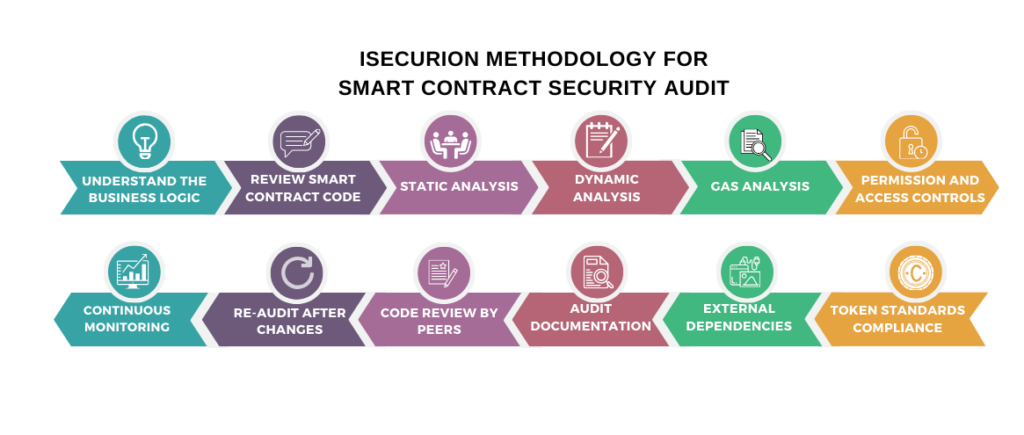
An audit is a comprehensive review of smart contract code performed by experienced blockchain security specialists who examine potential vulnerabilities before deployment.
A professional audit typically includes:
Logic Verification
Reviewing whether the code behaves exactly as intended under all expected scenarios.
Vulnerability Analysis
Searching for known security weaknesses, including reentrancy, overflow issues, access control flaws, and oracle risks.
Economic Attack Simulation
Evaluating whether attackers could exploit protocol incentives or manipulate token economics.
Gas Optimization
Improving execution efficiency while reducing unnecessary blockchain costs.
Although audits significantly improve security, they should never be viewed as a guarantee of perfection.
Security is an ongoing process—not a one-time event.
Best Practices for Protecting Automated Capital
Whether managing a personal portfolio or operating institutional infrastructure, several principles consistently reduce security risk.
Diversify Across Protocols
Avoid concentrating all assets within a single protocol or blockchain ecosystem.
Diversification reduces the impact of isolated failures.
Consider spreading capital across:
- Multiple staking providers.
- Different lending protocols.
- Several blockchain networks.
- Independent liquidity pools.
Monitor Protocol Health Continuously
Security does not end after making an investment.
Investors should regularly review:
- Governance proposals.
- Audit updates.
- Community announcements.
- Validator performance.
- Treasury transparency.
- Smart contract upgrades.
Many protocol failures provide warning signs before becoming major incidents.
Use Hardware Wallets Whenever Possible
Private key security remains one of the simplest yet most effective protective measures.
Hardware wallets isolate signing operations from internet-connected devices, significantly reducing exposure to:
- Malware.
- Browser exploits.
- Phishing attacks.
- Keyloggers.
- Remote access attacks.
Even the most secure protocol cannot protect assets if wallet credentials are compromised.
Limit Smart Contract Permissions
Many users unknowingly grant unlimited token approvals to decentralized applications.
Regularly reviewing and revoking unnecessary permissions helps reduce potential exposure if a protocol later becomes compromised.
Permission management should become part of routine portfolio maintenance.
Avoid Chasing Unrealistic Yields
Exceptionally high APYs often reflect exceptionally high risk.
Before allocating capital, investors should ask:
- Where does the yield originate?
- Is it sustainable?
- Has the protocol been audited?
- How long has the project operated?
- Does the token economy support long-term rewards?
If returns appear too good to be true, additional investigation is almost always justified.
Security for Algorithmic Trading Systems
Automated trading introduces another layer of operational risk beyond smart contracts alone.
Professional algorithmic infrastructure should include:
Secure API Management
- Encrypted API credentials.
- Limited account permissions.
- IP address whitelisting.
- Regular credential rotation.
Risk Controls
Every automated strategy should enforce predefined limits, including:
- Maximum position size.
- Daily loss thresholds.
- Portfolio exposure limits.
- Emergency shutdown mechanisms.
Infrastructure Monitoring
Reliable systems continuously monitor:
- API connectivity.
- Exchange availability.
- Latency.
- Failed transactions.
- Execution quality.
Automation without monitoring creates hidden operational risk.
Choosing a Platform Built Around Security
As decentralized finance continues to mature, security has become one of the primary factors separating professional-grade platforms from experimental projects. Investors increasingly expect infrastructure that not only delivers advanced functionality but also incorporates security into every layer of its architecture.
A modern Web3 platform should provide transparent information about completed smart contract audits, security certifications, encryption standards, multisignature treasury management, and ongoing vulnerability monitoring. Built-in risk controls, real-time alerts, secure API management, and continuous system health checks allow users to automate investment strategies while maintaining confidence in the underlying infrastructure.
Comprehensive analytics dashboards further enhance operational security by monitoring portfolio exposure, protocol performance, liquidity conditions, and unusual market activity from a single interface. When security and automation are integrated rather than treated as separate features, investors gain a far more resilient environment for managing digital assets.
The Future of DeFi Security
As blockchain ecosystems evolve, security technologies are advancing just as rapidly.
Several innovations are expected to define the next generation of decentralized protection:
- Artificial intelligence capable of identifying abnormal smart contract behavior before exploits occur.
- Formal verification, allowing developers to mathematically prove that critical functions behave as intended.
- Decentralized insurance protocols that provide additional protection against specific categories of smart contract risk.
- Real-time threat detection systems monitoring suspicious transactions across multiple blockchain networks.
- Zero-knowledge technologies that enhance privacy without sacrificing transparency or security.
Rather than relying on a single defensive mechanism, future DeFi ecosystems will combine multiple layers of protection to create far more resilient financial infrastructure.
Conclusion
Smart contracts have unlocked extraordinary possibilities for decentralized finance, enabling automated lending, trading, staking, liquidity provision, and countless other innovations without traditional intermediaries. Yet every advantage created by automation also increases the importance of security.
Protecting digital assets requires more than choosing promising investment opportunities. It demands understanding how protocols are built, how risks emerge, and how vulnerabilities can be mitigated through disciplined operational practices. Independent audits, continuous monitoring, diversified capital allocation, secure wallet management, robust API protection, and intelligent risk controls are no longer optional—they are essential components of responsible participation in Web3.
As institutional adoption accelerates and automated financial systems become increasingly sophisticated, security will remain the foundation upon which every successful blockchain ecosystem is built. In decentralized finance, trust is not established through promises or reputation alone. It is earned through transparent code, resilient infrastructure, and a continuous commitment to protecting the capital entrusted to the network.